|
Time - A World Wide Panorama
|

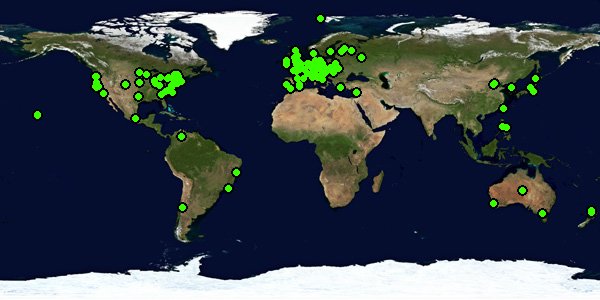
Click on the globe below... or choose the random panorama
|

|
Lists of panoramas for this event:
|
Download data files for popular world viewers:
|
Previous Events:
- Best Of 2011, December 16th – 31st, 2011
- History, September 16-25, 2011
- Family, June 16–27, 2011
- Limits, March 18-27, 2011
- International Year of Forests, January 1st - December 31st, 2011
- Best Of 2010, January 1st - December 30th, 2010
- Crossroads, September 18-26, 2010
- Forgotten Places, June 19–27, 2010
- Food, March 18-28, 2010
- Best Of 2009, January 1st - December 30th, 2009
- Performing Arts, September 17-22, 2009
- Diversity, March 18—23, 2009
- Best Of 2008, January 1st - December 30th, 2008
- Color, September 18-23, 2008
- Elevation, June 18-22, 2008
- Beginnings, March 19-23, 2008
- Wrinkle Tribute, December Solstice - 0608 UT, 22 December 2007 +/- 12 h
- Best of 2007, January 1st - December 28th, 2007
- Sustenance, September 19-23, 2007
- Community, June 15-21, 2007
- Atmosphere, March 20-25, 2007
- Best of 2006, January 1st - December 31st, 2006
- Transportation, September 20-24, 2006
- Gardens, June 20-25, 2006
- Borders, March, 2006
- Best of 2005, January 1st - December 31st, 2005
- Energy, September, 2005
- Water, June, 2005
- Marketplace, March, 2005
- Sanctuary, December, 2004
- Bridges, September, 2004
- World Heritage, June, 2004
- The Original WWP, March 20, 2004
Go to the WWP Home Page
|
 A VR panorama (VR for virtual reality) is a specially created computer
image that goes all the way around the viewer. It is a revolutionary
way to document a particular place and time - the next best thing to
being there.
VR panoramas are interactive. Use the mouse to rotate the panorama, use
Shift and Control to zoom in and out. |
About the theme - Time
by Keith Martin
The theme for the June WWP event is Time.
We can't see, touch or taste it, but Time affects us all.
We have many phrases to describe the passage of time and its effects,
including "the ravages of time", "time flies" (whether straight like
an arrow or curved like a banana), "time waits for no man", and "time
takes its toll". Many of these phrases are used as warnings to watch
out and keep track of time, as "running out of time" is a common
experience for us all.
We speak of time running at different speeds, subjectively at least;
when we're enjoying something it flies past, but when we're doing
something deathly dull it crawls. Einstein found that time really
does run at different speeds in an objective sense too, as set out in
his theory of relativity - although this doesn't explain why waiting
for a kettle to boil always seems to double the time it takes.
Whether we regard something as maturing or degenerating, we are
describing the effects of the passage of time. Time is evident in new
growth woods and ancient forests, in natural erosion and weathered
storm pilings, and in the dynamism of small children as well as the
quiet of the elderly. It is shown in the accumulation of dust in
quiet corners and in the rush-hour crowds of commuters seen every
weekday in cities around the world.
We live our lives by timetables (or schedules, however you choose to
pronounce the word). We use alarms to wake us up (although in my case
I never actually hear the alarm), we know when we have to leave the
house in order to get somewhere by a certain time, and we try to get
to bed by a certain time as well. We speak of good or bad timing,
free time, time alone, 'me' time, time for change - yet, despite how
vital time is to us all in every part of our lives, we cannot
actually affect time in any way; it marches on.
Showing time in some way, capturing its effects or essence in
pictures, can be a challenge, but it offers tremendous creative and
aesthetic possibilities. Time-lapse photography, very slow shutter
speeds and other ways of using time to affect the picture-taking
process itself are as valid as concentrating on recording aspects of
time within the subject.
How will you convey time in a panorama?
Keith
|
All images are copyright by the individual photographers. Use in
any way other than viewing on this web site is prohibited unless
permission is obtained from the relevant photographer.
All images and panoramas are NOT in public domain, unless stated otherwise by the contributor! The individual photographers retain their rights to their works. Any inquiries need to be sent to the individual participants. The WWP admin team does not provide contact information beyond what has been made public by the participants on their profile pages.
The overall site is copyright by the World Wide Panorama Foundation, a California Public Benefit Corporation.
The World Wide Panorama events were originally sponsored by the Geography Computing
Facility at the University of California Berkeley, and hosted
by The Geo-Images Project. The WWP is now run by the World Wide Panorama Foundation, a California Public Benefit Corporation.
This is a non-commercial project, done
simply to create enthusiasm for VR photography, and provide an outlet
for our collective creativity.
The World Wide Panorama was founded by Don Bain and Landis Bennett.
Interactive maps and database programming by Markus Altendorff. Logo and region graphics by
Kat Bennett. Google Earth management by Thomas Rauscher.
|
|