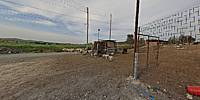

Kleftico 'on the hoof'
A farm on the outskirts of Voroklini Village, Cyprus
March 27, 2010, 3:30 local time

Loading panorama viewer ...
Configuring ...
© 2010 Norma Boylan, All Rights Reserved.
Caption
The name kleftico is derived from the Greek verb kleptes, 'to steal,' the same verb gives us the word kleptomania.This pano was taken on a hot sunny Saturday afternoon whilst the farm hands were herding the animals, a mixture of sheep and goats, together with their offspring. At times they were surrounding my tripod eek!
Kleftiko became a firm favourite meal for me about 30 years ago when I started visiting the Greek Islands. A local farmer explained that the recipe originated from the vagabonds/thieves, who would steal a sheep or lamb and cook it up in the hills. They dug a pit in the ground, lined it with wood, and put the whole sheep in the pit covering with a further layer of wood, which was then set alight. The whole thing was then buried in earth and left to cook for as long as 24 hours. The reason for the cooking method was so that there was no smoke, and so the vagabonds escaped detection.
Nowadays the dish is often made using kid or goat and we use a different method of cooking ;-)
recipe here~
Equipment
Taken with a Canon EOS 400D digital camera, with a Zenitar-M 16mm fisheye f/2.8 lens mounted on a Panosaurus pano head. Stitched using Hugin and rendered with CubicConvertor.
 Tap or click the zoom icon in the bottom right corner of the picture to switch between in-page and fullscreen view