

Loading panorama viewer ...
Configuring ...
© 2007 Clemens Pfeiffer,
Some Rights Reserved.

Caption
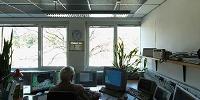
The history of the Central Institute for Meteorology and Geodynamics
By Imperial Resolution of the 23 of June 1851, Emperor Franz Joseph authorised the establishment of "a central institute for meteorological and magnetic observations", to become the Central Institute of Meteorology and Geomagnetism, which can be traced back to an initiative of the Austrian Academy of Science. In 1848, this had already addressed a request to Karl Kreil, director of the Prague Astronomical Observatory and member of the academy, to develop a meteorological observation system for the Austrian Empire.Karl Kreil (1798-1862) was the first director of the newly founded Central Institute and simultaneously professor of Physics of the Earth at the University of Vienna. This union of persons, between director on the one hand and university lecturer on the other, has been maintained up to the present day and continuously affected scientific research at the Institute. Kreil established a meteorological observation system for the entire territory of the Austrian Empire, and carried out the first national geomagnetic survey for the same.
The Institute began issuing daily weather charts in 1865.
In 1872, the Central Institute moved to its new and final quarters, built by Heinrich Ferstel on the 'Hohe Warte' grounds in Döbling, Vienna. A year later, in 1873, the Central Institute organised the first international meteorological congress in Vienna, where the International Meteorological Organisation (IMO) was founded as predecessor to the World Meteorological Organisation (WMO).
The issue of daily telegraphic weather reports, with a synoptic chart and forecast for the following day, was undertaken from 1877. The new weather report contained the morning observations from 60 stations throughout Europe, 24 of them in Austria.
With the decree of 23 February 1904, the entire seismic service for Austria was transferred to the Institute, which also resulted in a change of name to the Central Institute for Meteorology and Geodynamics.
Outstanding scientists followed Kreil in his office as director, among them Julius Hann (1839-1921) and Felix Maria Exner (1876-1930). When Hann's importance in the world of meteorology was worldwide - he compiled the comprehensive 'Textbook of Meteorology' and in his era people began to speak of a 'School of Austrian Meteorology' - then by Exner, we are reminded of a great theoretician and his outstanding work 'Dynamic Meteorology'.
Among many others who worked at the Institute were researchers like Max Margules (1856-1920), co-founder of theoretical meteorology, and Victor Conrad (1876-1962), who discovered a discontinuity in the earth's crust, named after him. Only once was the tradition of the Central Institute interrupted: after the annexation of Austria to the German Third Reich the climate and weather service was transferred to Berlin and subjugated to the Reich Weather Service; the Central Institute in Vienna was turned into a research centre.
After the Second World War, the original status was restored and there was considerable expansion of premises and personnel, which was also reflected in numerous scientific research successes. In 1957, a house on an adjacent estate was purchased and adapted for office use: between 1967 and 1973, in two stages, a radar station, balloon filling hangar and a new office building were erected on the grounds of the Central Institute. The new office building accommodates, amongst other things, one of the largest technical libraries of meteorology and geophysics.
Today, as a partially incorporated federal establishment, the Central Institute is a modern service provider, with regional offices for Salzburg and Upper Austria, Carinthia, Tyrol and Vorarlberg, and Styria. Let us just mention only a few of its activities here. The synoptic department is, with the help of modern technology, responsible for the daily forecast service. The geophysical department carries out the earthquake and geomagnetic service. The climatic department prepares climatic statistics and charts from the data provided by the Austrian monitoring network. The technical department maintains this meteorological monitoring network, consisting of semi-automatic weather sampling (TAWES) and climate (TAKLIS) stations. The environmental meteorology department investigates the dispersal of pollutants in the atmosphere, and in crises, (such as radioactive releases into the atmosphere) delivers warnings directly to the Federal Warning Centre. The Electronic Data Processing department is equipped with the latest hardware to cope with the extensive computer-controlled processes.
special thanks to Dr. Herbert Gmoser
Equipment
Canon Powershot G7, Stitcher
Caption in [German]
Die Geschichte der Zentralanstalt für Meteorologie und Geodynamik
höchster Entschließung vom 23. Juli 1851 bewilligte Kaiser Franz Joseph die Errichtung "…einer Centralanstalt für meteorologische und magnetische Beobachtungen" der Zentralanstalt für Meteorologie und Erdmagnetismus, die auf eine Initiative der Österreichischen Akademie der Wissenschaften zurückgeht. Diese richtete bereits 1848 das Ersuchen an Karl Kreil, Direktor der Sternwarte zu Prag und wirkliches Mitglied der Akademie, ein meteorologisches Beobachtungssystem für die österreichische Monarchie zu entwerfen. Karl Kreil (1798 - 1862) wurde erster Direktor der neu gegründeten Zentralanstalt und zugleich Professor für Physik an der Universität Wien. Diese Personalunion, zwischen Direktor einerseits und Universitätslehrer andererseits, blieb bis heute erhalten und beeinflusste nachhaltig die wissenschaftliche Forschung an der Zentralanstalt. Kreil richtete ein meteorologisches Beobachtungssystem für das Gebiet der gesamten österreichischen Monarchie ein und führte für dieses auch die erste geomagnetische Landesaufnahme durch.1865 begann man an der Zentralanstalt mit der Herausgabe einer täglichen Wetterkarte.
1872 übersiedelte die Zentralanstalt in ihr, von Heinrich Ferstel erbautes, neues und endgültiges Quartier an der Hohen Warte in Wien Döbling. Ein Jahr später, 1873, organisierte die Zentralanstalt den ersten internationalen Meteorologenkongress in Wien, wo die Internationale Meteorologische Organisation (IMO) als Vorläuferin der Weltmeteorologischen Organisation (WMO) gegründet wurde.
Ab 1877 erfolgte die Ausgabe des täglichen telegraphischen Wetterberichtes, mit einer synoptischen Karte und der Prognose für den folgenden Tag. Der neue Wetterbericht enthielt die Morgenbeobachtung von 60 Stationen aus allen Teilen Europas, darunter 24 inländische.
Mit Erlass vom 23. Februar 1904, wurde der Zentralanstalt der gesamte seismische Dienst für Österreich übertragen, was auch die Namensänderung in Zentralanstalt für Meteorologie und Geodynamik nach sich zog.
In seinem Amt als Direktor folgten Kreil hervorragende Wissenschaftler, darunter Julius Hann (1839 - 1921) und Felix Maria Exner (1876 -1930).
War Hanns Bedeutung in der Klimatologie eine weltweite und begann man in seiner Ära von einer österreichischen Meteorologenschule zu sprechen - Hann verfasste auch das umfassende "Lehrbuch der Meteorologie" -, so erinnert man sich bei Exner an einen großen Theoretiker und an sein Werk der "Dynamischen Meteorologie".
An der Zentralanstalt arbeiteten unter vielen anderen Forscher wie Max Margules (1856 - 1920), Mitbegründer der theoretischen Meteorologie und Victor Conrad (1876 - 1962), Entdecker der nach ihm benannten Diskontinuität im mittleren Bereich der Erdkruste.
Nur einmal wurde die Tradition der Zentralanstalt unterbrochen: nach dem Anschluss Österreichs an das Deutsche Reich musste der Klima- und Wetterdienst nach Berlin übersiedelt werden, wo diese dem Deutschen Reichswetterdienst unterstellt wurden; die Zentralanstalt in Wien wandelte man in ein Forschungsinstitut um. Nach dem zweiten Weltkrieg wurde der ursprüngliche Zustand wieder hergestellt und es kam zu einer beachtlichen personellen und räumlichen Expansion der Zentralanstalt, die auch in den zahlreichen wissenschaftlichen Forschungsergebnissen reflektiert wird. 1957 konnte ein Haus auf dem Nachbargrundstück erworben und in der Folge für Bürozwecke adaptiert werden; zwischen 1967 und 1973 wurde ein Radarturm, ein Ballonfüllhaus und ein neues Bürogebäude in zwei Baustufen auf dem Gelände der Zentralanstalt errichtet. Das neue Bürogebäude beherbergt u.a. eine der größten Fachbibliotheken auf dem Wissensgebiet der Meteorologie und Geophysik.
Heute ist die Zentralanstalt, mit ihren Regionalstellen für Salzburg und Oberösterreich, für Kärnten, für Tirol und Vorarlberg und für die Steiermark, als teilrechtsfähige Einrichtung des Bundes, ein moderner Dienstleistungsbetrieb. Nur einige Tätigkeiten seien hervorgehoben: die Synoptikabteilung ist, unter Zuhilfenahme modernster Technik, für den täglichen Prognosedienst zuständig. Die geophysikalische Abteilung führt den Erdbeben- und Geomagnetischen Dienst durch. Die Klimaabteilung erstellt, mittels der aus dem österreichischen Messnetz gewonnenen Daten, Klimastatistiken und -karten. Die technische Abteilung betreut dieses meteorologische Messnetz, das aus teilautomatischen Wettererfassungssystemen (TAWES-Stationen) und teilautomatischen Klimastationen (TAKLIS-Stationen) besteht. Die Abteilung für Umweltmeteorologie untersucht die Ausbreitung von Schadstoffen in der Atmosphäre und gibt in Krisenfällen (z.B. bei Austritt von Radioaktivität in die Atmosphäre) direkte Information an die Bundeswarnzentrale ab. Die Abteilung für elektronische Datenverarbeitung ist mit modernsten Geräten zur Bewältigung der umfangreichen computergesteuerten Abläufe ausgestattet.
Vielen Dank an Herrn Dr. Herbert GMOSER
Webseite der ZAMG
 Tap or click the zoom icon in the bottom right corner of the picture to switch between in-page and fullscreen view